I Attended the Largest Infertility Counseling Conference. Here’s What Potential Surrogates Should Know.
As the Head of Surrogate Engagement at Brownstone Surrogacy, I went to the Jones Foundation Infertility Counseling Conference in Philadelphia: the biggest conference focused on the emotional, ethical, and psychological sides of fertility care.
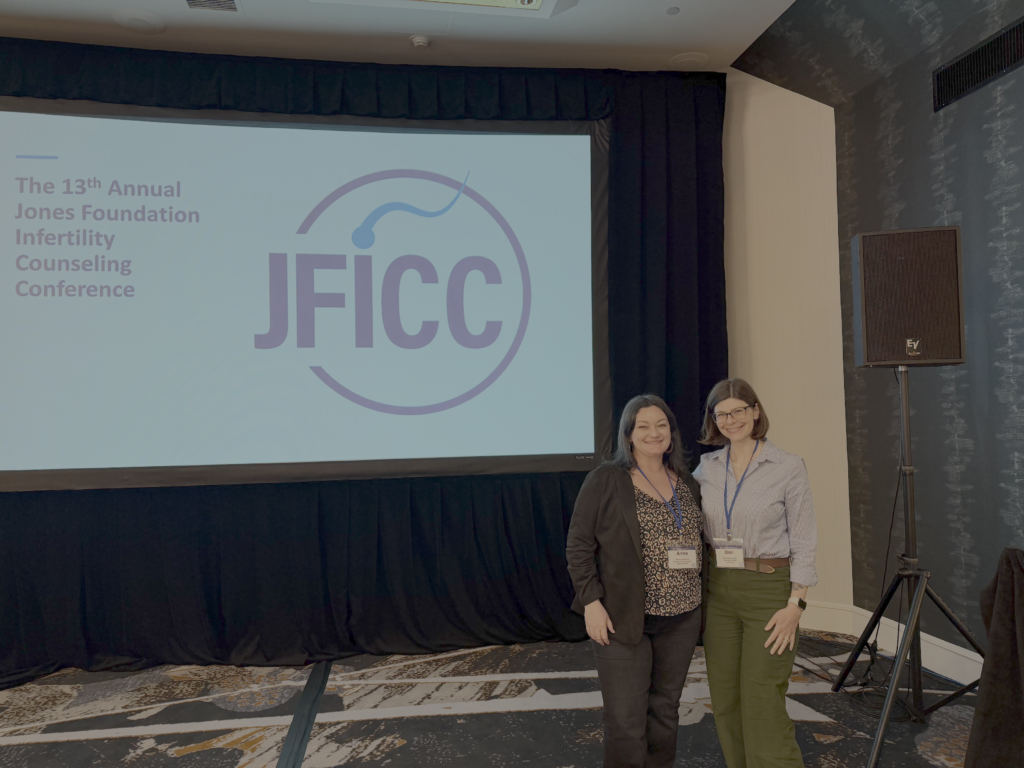
Our Head of Surrogate Engagement, Anna Ioannou, pictured with licensed mental health counselor for Brownstone intended parents, Dori Kavanagh.
The conference brought together mental health professionals, doctors, and others who help people through infertility and family building. I took plenty of notes, but more importantly, I left with a better idea of what experts are focusing on right now.
If you’re thinking about becoming a gestational carrier, or surrogate, here are a few things you should know:
The emotional experience is real
and more complex than people talk about.
Research shared at the conference, including new studies on gestational carrier mental health, matched what many agencies and clinicians see in real life. Most surrogates feel proud of their role, feel close to the intended parents, and describe the experience as meaningful or even life-changing.
At the same time, many surrogates face moments that are harder than they expected. These can include:
-
-
-
-
- unexpected emotions during pregnancy
- stress if something doesn’t go as planned
- a shift after delivery, when the journey is “over”
-
-
-
In a session on surrogate well-being, clinicians discussed how sudden the transition can feel. During the process, you attend regular appointments, stay in close contact, and work toward a clear goal. After delivery, that routine changes. Even if everything goes well, this shift can be tough for surrogates.
The point isn’t that surrogacy is hard. It’s that it’s meaningful, and meaningful things deserve real support at every stage, including after delivery. A strong agency knows the journey doesn’t end in the delivery room. It continues to support you and prioritize your well-being even after you’re home.
Not everything you see online reflects the full picture.
Another topic that came up was how much people are learning about fertility through social media and online content. More information is available than ever, and more people are sharing their experiences, but what you see online often reflects a narrow slice of reality.
One presentation explored how platforms like TikTok shape how people understand infertility and treatment, particularly among younger audiences who increasingly turn to social media for health information. These platforms intentionally amplify emotional stories, which can make them feel more universal than they actually are.
People often enter the process feeling they already understand how it works. Sometimes that helps. Sometimes it creates confusion or unrealistic expectations.
If you’re considering surrogacy, take the time to get information from sources grounded in experience across many journeys, not just one. Organizations like the American Society for Reproductive Medicine (ASRM), Society for Assisted Reproductive Technology (SART), and groups like RESOLVE: The National Infertility Association can also provide reliable, research-backed information as you learn more.
Surrogacy is a shared process, and everyone has a role.
Surrogacy brings people together to help grow a family–intended parents, a surrogate, and a team of professionals who support the process. Everyone has a role to play, and no one should carry the whole process alone.
A strong agency actively creates that balance. We:
-
-
-
-
- help each party understand their role from the beginning
- set clear expectations around communication and decision-making
- encourage people to speak up when something doesn’t feel right
- step in to facilitate when things feel unclear, uneven, or difficult to navigate
-
-
-
For you, this means staying involved and feeling supported when you share your preferences. For intended parents, it means staying engaged, communicative, and thoughtful. For professionals, it means guiding the process with care and consistency.
When everyone understands and does their part, the experience is more stable, more collaborative, and more sustainable. That doesn’t happen by itself. An experienced agency works to create that balance throughout the journey.
Final thoughts
There’s a lot of information out there about surrogacy, and many different perspectives. What stood out to me after this conference is that the people who work most closely with surrogacy think deeply about the human side, not just the logistics, but the whole experience.
If you’re thinking about becoming a surrogate, you don’t have to figure everything out right away. Start by looking for clear, reliable information and work with professionals who will guide you, answer your questions honestly, and support you as you decide what feels right for you.
That’s something I’ll remember in my work, and I hope you keep it in mind as you explore whether this path is right for you.
Sources & Further Reading
This piece reflects insights shared at the 2026 Jones Foundation Infertility Counseling Conference, including sessions on:
-
-
-
-
-
- Gestational Carrier emotional well-being and postpartum support
- Psychological evaluation in third-party reproduction
- Legal frameworks for parentage in assisted reproduction
- The impact of social media on fertility perceptions
- Policy and access trends in fertility care
-
-
-
-